Artist profile
Sepia is a bass and club music producer working in electronic and dance contexts. Their work engages with rhythmic experimentation and low-end design characteristic of contemporary club production.
Compare with another artistPlan a set with Sepia tracks scored against the rest of the catalog
Sepia is a moderate-energy — mostly instrumental artist.
Sits right in the typical 140 / Deep Dubstep / Grime pocket.
Across 18 analysed tracks, Sepia averages 58% energy — harder than 58% of individual 140 / Deep Dubstep / Grime tracks — and 36% groove, straighter than 58%.
Measured against 4,816 140 / Deep Dubstep / Grime tracks on 11 August 2026.
Missing one of theirs?
We'll add it — the artist is already in the catalogue, so it lands fast
We scored every transition between Sepia’s 18 analysed tracks and every track by 12,460 other artists. 113 catalogues clear the bar — a transition counts at 80 chemistry or above, the same number you’ll see on any track page. The 8 with the widest margin over chance are below.
Chance is measured, not assumed: 0.573% of transitions between two randomly drawn tracks by different artists in this catalogue reach 80. Listed alphabetically — the set is reproducible, the order inside it is not.
39 of the 684 transitions between these catalogues reach 80 chemistry. Chance would give 3.9. They come from 13 different Sepia tracks.
36 of the 720 transitions between these catalogues reach 80 chemistry. Chance would give 4.1. They come from 9 different Sepia tracks.
Barstow - Sepia Remix → Tokyo Hyaku Synchronicity #76 Night Visitors · 3A → 3A · same BPM · 88 chemistry
37 of the 720 transitions between these catalogues reach 80 chemistry. Chance would give 4.1. They come from 12 different Sepia tracks.
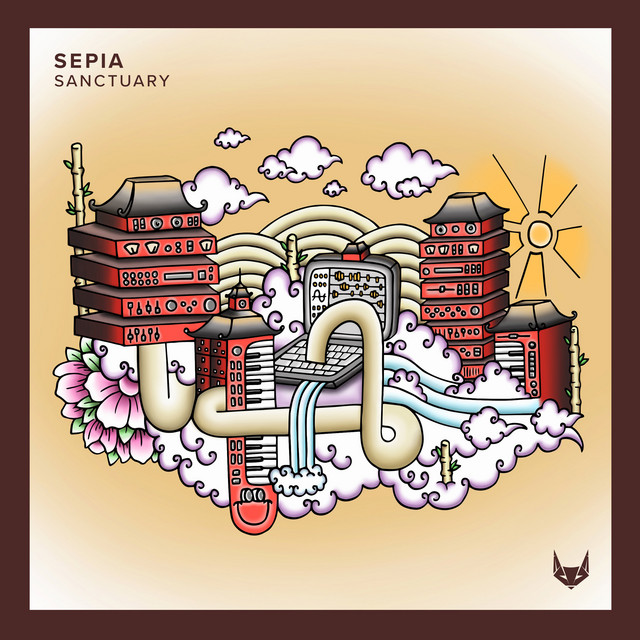
Sanctuary → What Happened To Him · 1B → 2A · same BPM · 91 chemistry
38 of the 720 transitions between these catalogues reach 80 chemistry. Chance would give 4.1. They come from 14 different Sepia tracks.
Flutez → You Are Not a Badman · 7A → 7A · same BPM · 91 chemistry
31 of the 342 transitions between these catalogues reach 80 chemistry. Chance would give 2.0. They come from 12 different Sepia tracks.
31 of the 270 transitions between these catalogues reach 80 chemistry. Chance would give 1.6. They come from 11 different Sepia tracks.
Last Chance Saloon → Eternal · 4A → 5A · same BPM · 87 chemistry
39 of the 468 transitions between these catalogues reach 80 chemistry. Chance would give 2.7. They come from 9 different Sepia tracks.
Last Chance Saloon → Warped Dub · 4A → 4A · half-time · 88 chemistry
36 of the 720 transitions between these catalogues reach 80 chemistry. Chance would give 4.1. They come from 12 different Sepia tracks.
Instinct → Monsterpiece · 6B → 6B · same BPM · 89 chemistry
Chemistry weighs harmonic, rhythmic, energy, groove, mood and vocal compatibility. Tempos are as analysed from the recording — where a genre is habitually detected an octave down, this is how we handle it. Different measurement from the audience-overlap list further down the page.
DJs and producers closest to Sepia by audience overlap — the artists their listeners also play. It’s a taste signal, not a measured key-and-tempo match: good for shortlisting crates when you’re prepping a set around Sepia, then check the chemistry on the pair you actually mix. Eligible names link to their own page.
Similarity data from Last.fm. BPM, key and energy on this page are measured from the recordings in our catalog.
Sepia's tracks in our catalog range from 70 to 140 BPM, with a median of 118 BPM. Across 18 tracks, the most common range falls in the 120–125 BPM bucket.
Sepia's tracks are mostly in minor keys (50% minor across 18 tracks). The most common single key is 6B (B♭ Major) with 3 tracks.
We scored every transition between Sepia's 18 analysed tracks and every track by 12,460 other artists. 113 catalogues clear the bar by more than chance would give, and Abstrakt Sonance, Cam Lasky, Caspa are three of them — listed alphabetically, because the set is reproducible and the order inside it is not. A transition counts at 80 chemistry or above, the same number shown on a track page. One measured example: Tune In into New Order, 10B to 10B, 93 chemistry.
Sepia sits closest to Soul In Sadness, Schock, Eisheilig in our catalog. That ranking is audience overlap — the artists their listeners also play — rather than a measured key-and-tempo match, so treat it as a shortlist worth digging through, not a promise that any two tracks will beatmatch. The full list, with track counts, is in the Related artists section above.
Our catalog has Sepia releases spanning 2017 to 2024, with the most tracks from the 2020s.